











How to Choose the Perfect Water Heater for Your Home

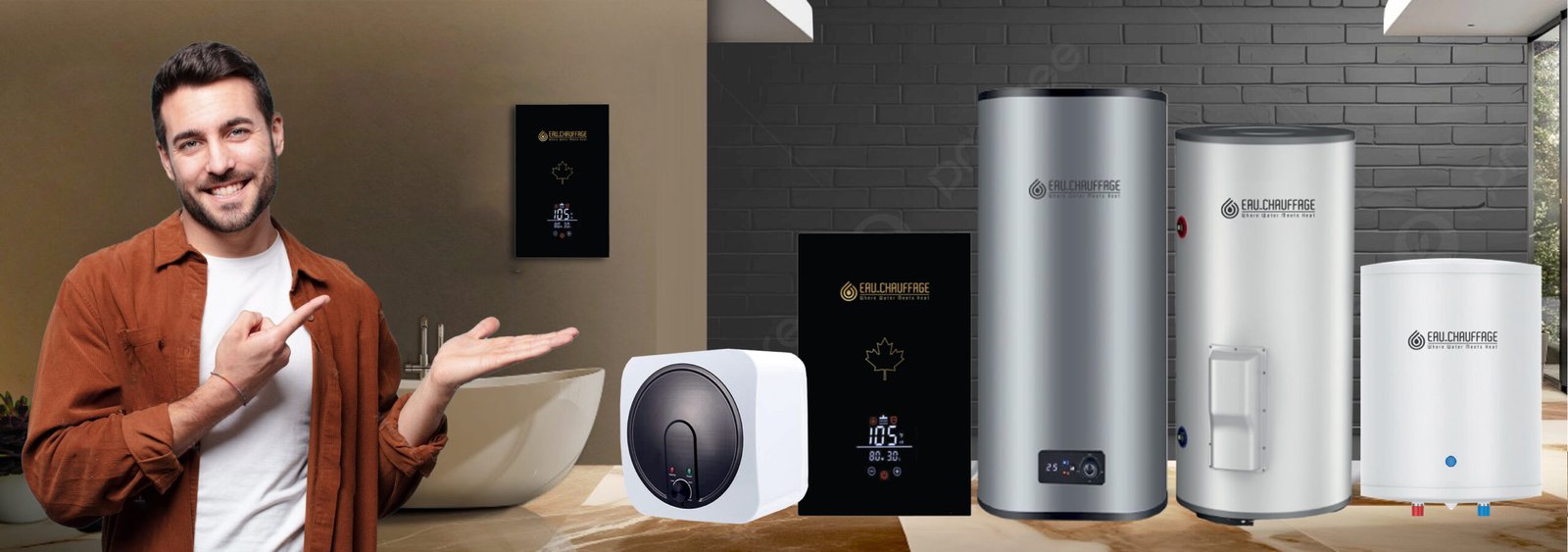
Most water heater advice starts by listing product types. That is the wrong starting point, because it asks you to choose a solution before defining the problem. This guide gives you a decision method instead: six steps that take you from your building to a specification you can order with confidence.
If you would rather read about the types themselves first, see our complete guide to water heater types.
Step 1: Measure Peak Hour, Not Daily Use
This is the step that decides whether you are satisfied. Do not ask how much hot water your household uses in a day. Ask how much you need within your busiest hour.
Count what actually happens in that hour: how many showers, whether any overlap, whether the kitchen or laundry runs at the same time. A family of five that showers in sequence across the evening has a completely different requirement from the same family leaving for work and school within forty minutes.
Undersizing here is the most common and most irritating specification error, because it produces a system that fails you at exactly the moment you rely on it.
Step 2: Decide Local or Central
| Your situation | Direction |
|---|---|
| One bathroom, or one distant fixture | Local unit at the point of use |
| Two or more bathrooms used at once | Central system with stored volume |
| Property empty for long periods | Instant, to eliminate standby loss |
| Whole building or multiple units | Central, sized on peak hour |
A useful test: if you are considering three or more separate heaters, a single central system is usually cheaper to buy, install and maintain.
Step 3: Choose the Energy Source
Compare on price per kilowatt-hour where you live, not on efficiency ratings. A 100% efficient appliance running on expensive energy can cost more per shower than a 75% efficient one running on cheap energy.
- Electric — simplest installation, no flue, minimal servicing, safe indoors.
- Gas — competitive where gas is cheap, but needs flue, ventilation and periodic servicing.
- Solar — highest long-term saving in sunny regions; requires roof area and backup.
- Heat pump — lowest electrical running cost for steady high demand; higher purchase price.
Step 4: Match the Format to the Space
Available space is a genuine constraint, especially in renovations where plumbing positions are fixed. Vertical cylinders suit tall wall recesses; horizontal units fit above ceilings and in wide, low voids; compact 8 to 25 litre units serve single fixtures where a full tank would be absurd.
Choosing a format that forces you to relocate pipework can cost more than the heater itself.
Step 5: Check the Specifications That Actually Matter
| Specification | Why it matters |
|---|---|
| Tank lining | Enamel coating or stainless steel decides service life |
| Anode rod | Sacrificial protection; must be present and maintainable |
| Insulation | Controls standby loss, your permanent background cost |
| Power rating | Determines recovery speed after the tank is drawn down |
| Safety package | Thermostat plus independent cut-out, pressure relief, leakage protection |
Note that capacity and power rating are different things. Capacity tells you how much hot water you have; power rating tells you how fast it comes back.
Step 6: Plan for Maintenance Before You Buy
A water heater you cannot service is a water heater you will replace early. Before ordering, confirm the anode rod can be accessed, the unit can be drained, and the pressure relief valve is reachable for testing.
This matters most in ceiling-mounted and enclosed installations, where a unit that was awkward to install is usually far more awkward to maintain.
Frequently Asked Questions
What size heater do I need for a family of four?
For a single bathroom used in sequence, 80 to 100 litres is a common starting point. If two bathrooms run simultaneously, move to a central system sized on peak-hour demand rather than adding a second small tank.
Is a bigger tank always safer?
No. An oversized tank keeps surplus water hot every hour of the year for nothing. Correct sizing beats generous sizing.
How long should a water heater last?
It depends far more on tank construction, water quality and anode maintenance than on brand. A protected, maintained tank lasts many years; the same tank with a consumed anode in hard water fails much sooner.
The Method Applied: Three Worked Examples
Example 1: Two-bedroom apartment, couple, one bathroom
Peak hour: two showers in sequence, occasionally a kitchen draw. No simultaneous use. Local or central: local, a single unit is sufficient. Energy: electric, no gas connection and no roof access. Format: vertical wall unit in the bathroom. Specification focus: insulation quality, because the apartment is empty during working hours and standby loss is the main avoidable cost. Result: a 50 to 80 litre storage heater, or an instant heater if the couple travels frequently and the property sits empty for weeks.
Example 2: Family villa, five people, three bathrooms
Peak hour: three showers between 6:30 and 7:30, two of them overlapping. This is the decisive fact. Local or central: central; three separate heaters would cost more to buy, install and maintain. Energy: electric with solar pre-heating, given available unshaded roof area. Format: plant room or utility installation. Specification focus: recovery rate as much as capacity, because the demand is compressed. Result: a central system around 300 to 500 litres with adequate power rating, optionally with solar carrying the base load.
Example 3: Small hotel, 25 rooms
Peak hour: the overwhelming majority of daily demand lands in roughly ninety minutes each morning. Local or central: central, without question. Energy: compare electricity and gas on local price per kWh; consider heat pump given the steady high volume. Format: plant room, with distribution to all floors. Specification focus: redundancy. A single unit failing means no hot water for guests. Result: cascaded units rather than one large tank, sized on the morning peak, not the daily total.
Pre-Order Checklist
- Peak-hour demand counted, including overlapping outlets
- Local versus central decided on that basis
- Energy source compared on actual local price per kWh
- Physical space and orientation confirmed against the unit’s format
- Tank lining and anode arrangement confirmed
- Insulation specification checked, not assumed
- Power rating checked against required recovery speed
- Safety package confirmed: thermostat, independent cut-out, pressure relief, leakage protection
- Anode and drain access verified for future maintenance
- Redundancy considered if hot water interruption would stop operations
If you can tick all ten, the specification is sound regardless of which supplier you order from.
Where to Spend and Where to Save
Budgets are finite, so it helps to know which specifications repay the extra cost and which are comfort features you can skip without regret.
| Worth paying for | Rarely decisive |
|---|---|
| Tank lining quality | App and Wi-Fi control |
| Insulation thickness | Display styling |
| Adequate power rating | Preset “modes” you never change |
| Complete safety package | Extra capacity you do not need |
| Accessible anode and drain | Cosmetic finishes |
The pattern is consistent: spend on the parts that determine lifespan and running cost, because you cannot upgrade them later. Convenience features can be lived without, and a smart controller will never rescue a tank that is undersized, poorly insulated or unprotected.
Repair or Replace?
If the fault is an element, thermostat, valve or anode, repair is almost always the sensible choice. These are consumable or serviceable parts and replacing them is inexpensive relative to a new system.
If the tank itself is leaking, replace. A perforated tank cannot be repaired reliably, and patching it postpones a failure that will eventually happen at a worse moment. A leak is also the clearest signal that the anode was not maintained, so whatever you install next deserves a maintenance schedule from day one.
Need a Second Opinion?
Send us your building type, number of bathrooms, occupancy and available space, and our engineers will size the system properly. Email sales@eauchauffage.com or call +1 (905) 299-3382. See also our 5 buying mistakes to avoid.
Need the capacity figures themselves? See what size water heater do I need for litre-by-fixture tables and worked peak-hour calculations.
Still deciding between one system and several? Central vs individual water heaters compares them on total cost rather than convenience.