











Central Water Heaters: Benefits, Applications, and Why Stainless Steel Is the Optimal Choice

Introduction
In a world increasingly focused on comfort and energy efficiency, central water heaters have become essential components in modern homes, commercial buildings, and residential compounds. These systems not only supply hot water on demand but also provide a comprehensive and efficient distribution solution throughout the entire property.
With advancements in manufacturing and materials, the use of stainless steel in the design of central heaters has become a hallmark of quality and durability—making it the preferred choice in the best systems available today.
What Are Central Water Heaters?
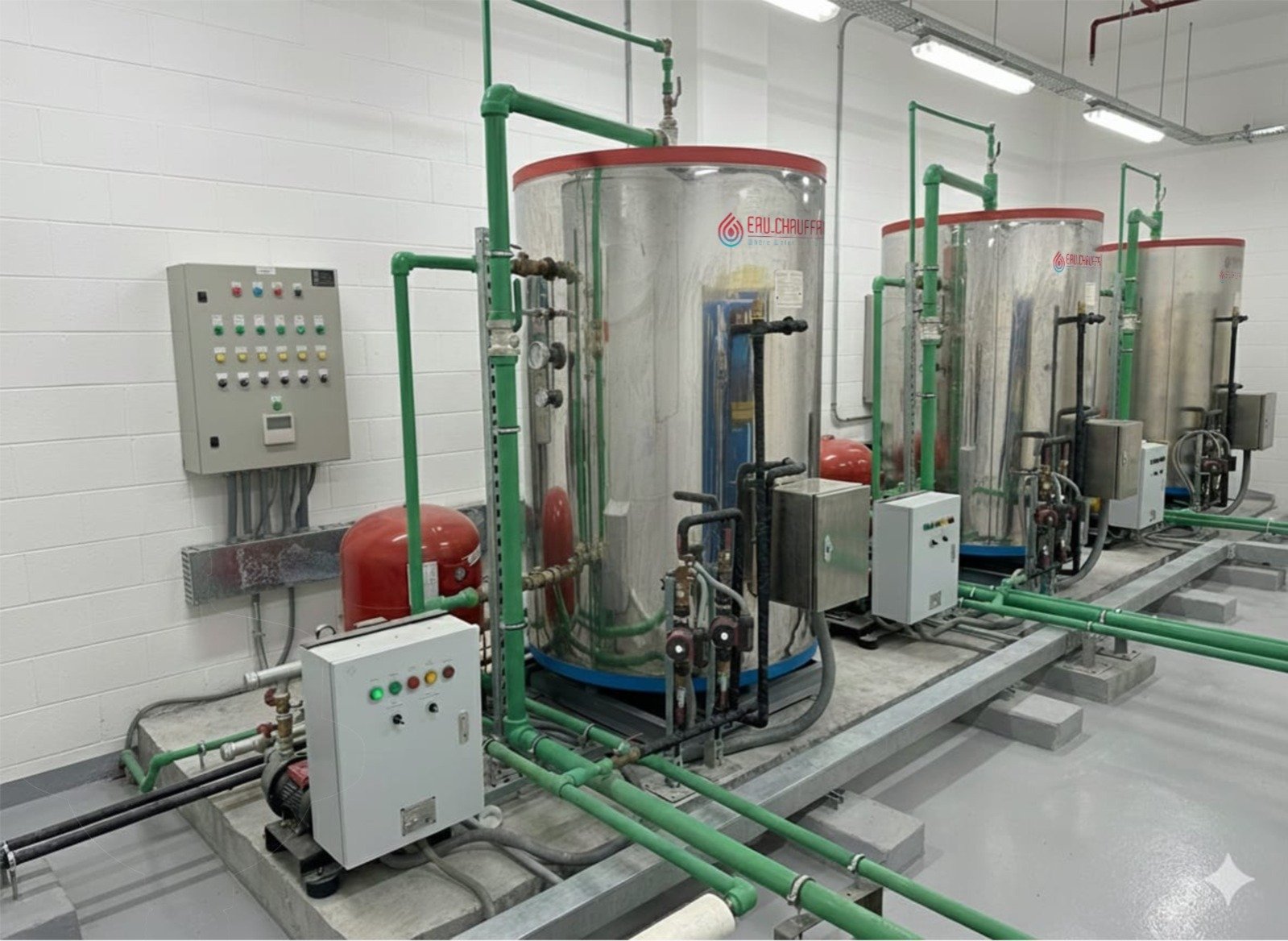
A central electric water heater is a unified system that uses electrical energy to heat water and distribute it to all water outlets (bathrooms, kitchens, etc.) through a network of thermally insulated pipes. This type of system offers a range of advantages, including:
- A continuous supply of hot water
- Consistent temperature at all outlets
- Reduced energy consumption compared to multiple individual heaters
Benefits of Central Water Heaters
Energy Efficiency
Thanks to smart control features, the central water heater can be programmed to operate during specific hours, which significantly reduces electricity usage and costs.
Space Saving
Instead of installing multiple point-of-use heaters, a single central unit serves the entire household efficiently.
High Safety Standards
Unlike gas water heaters, electric central systems do not produce fumes or toxic gases, making them safer for family use, especially in enclosed spaces.
Smart Control Options
Modern models come equipped with remote control via mobile apps or smart temperature sensors for automated operation.
Longer Lifespan
When built with high-grade materials like stainless steel, these systems last significantly longer and require less maintenance.
Why Stainless Steel Is the Best Material for Central Water Heaters
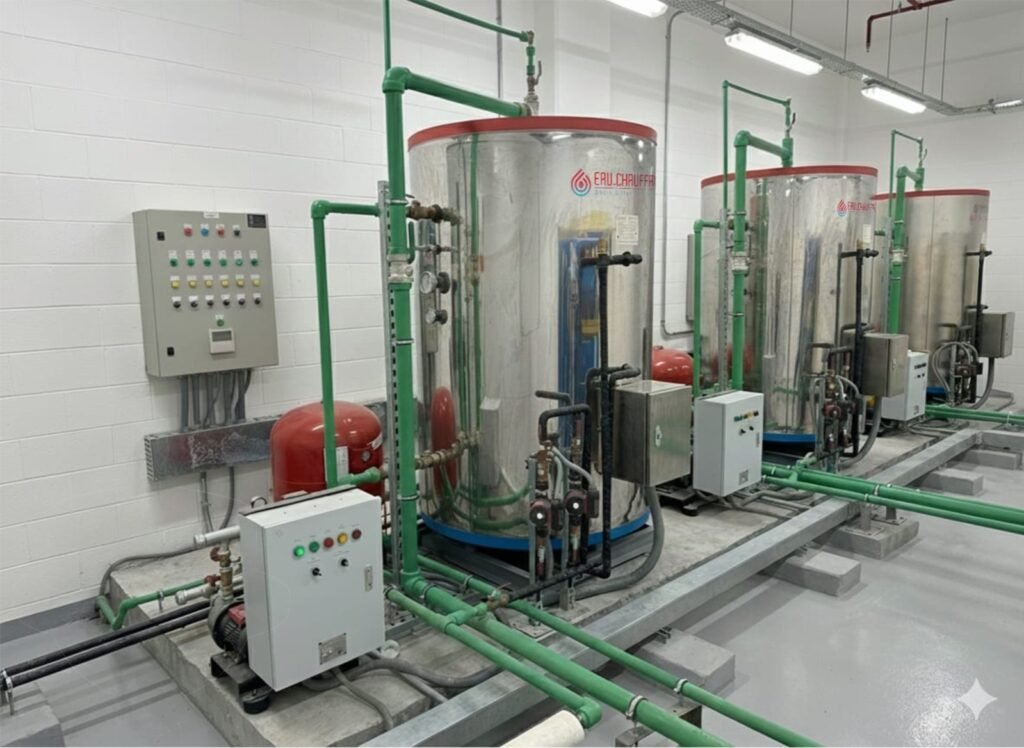
Stainless steel is widely regarded as the ideal material for the internal tanks of central water heaters due to its superior performance in demanding conditions. Here’s why:
Corrosion and Rust Resistance
Hot water, especially with varying temperatures and mineral content, is highly corrosive. Stainless steel tanks resist rust and corrosion far better than other materials, extending the life of the heater.
Preserves Water Quality
Stainless steel does not chemically react with water, meaning it won’t alter the taste, smell, or purity of the hot water over time.
Withstands High Temperatures
Its high thermal stability allows stainless steel to handle extreme heat without cracking or degrading.
Extended Durability
Water heaters made from stainless steel typically offer a longer operational lifespan, reducing replacement and maintenance costs.
Modern Aesthetic & Easy Maintenance
Stainless steel gives the heater a sleek, contemporary appearance and is easier to clean and maintain.
Common Applications for Central Electric Water Heaters
Central water heaters are used in various settings, including:
- Villas and large homes: To supply consistent hot water across all rooms simultaneously
- Hotels and serviced apartments: Where a continuous flow of hot water is essential
- Schools and hospitals: For sanitation and hygienic practices
- Gyms, spas, and wellness centers: To ensure luxurious and uninterrupted hot water experiences
Top Features to Look For in a Central Electric Water Heater
To ensure optimal performance, your central heater should include the following:
- High-grade stainless steel tank
- Fast and efficient heating technology
- Electric leakage protection system
- Digital temperature indicators or smart control panel
- Compatibility with solar energy systems
- Energy efficiency rating of A+ or higher