











Come dimensionare uno scaldabagno solare per il vostro tetto

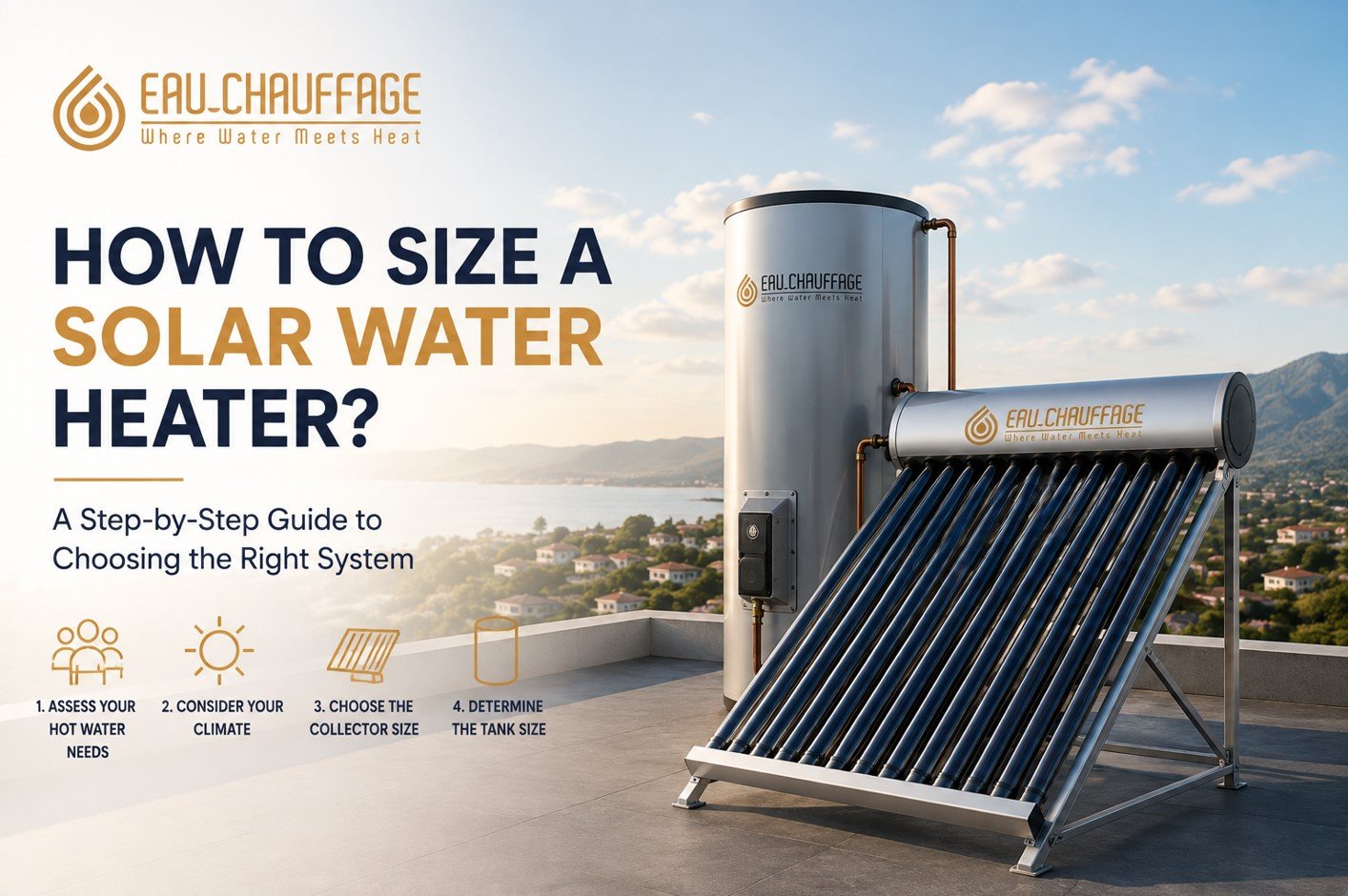
Dimensionare uno scaldabagno solare non è lo stesso problema di dimensionarne uno convenzionale. Con uno scaldabagno elettrico abbinate il serbatoio alla domanda e avete finito. Con il solare dovete abbinare due cose contemporaneamente: il serbatoio alla vostra domanda, e la superficie dei collettori all'energia che il vostro tetto riceve davvero.
Azzeccate il serbatoio e sbagliate i collettori, e il serbatoio non si scalda mai del tutto. Azzeccate i collettori e sbagliate il serbatoio, e o restate senza acqua calda o pagate per accumulare acqua che non usate mai. Questa guida copre il lato tetto di quell'equazione, la metà che la maggior parte degli acquirenti non vede mai spiegata.
Partite dal serbatoio, poi dimensionate il tetto di conseguenza
Lavorate in quest'ordine. La capacità del serbatoio segue la domanda della famiglia, esattamente come per qualsiasi sistema ad accumulo, e la nostra guida al dimensionamento degli scaldabagni tratta quel calcolo in dettaglio.
| Famiglia | Capacità del serbatoio | Superficie indicativa dei collettori |
|---|---|---|
| 1-2 persone | 100 L | circa 1,5-2 m² |
| 3-4 persone | 150-200 L | circa 2-3 m² |
| 4-6 persone | 200-300 L | circa 3-4 m² |
| Grande villa | 500 L e oltre | circa 6-8 m² e oltre |
| Commerciale | 1.000-15.000 L | Calcolata per progetto |
Una regola pratica comune è circa un metro quadrato di collettore ogni 50-75 litri di accumulo in un clima soleggiato. Consideratela una cifra di orientamento, non una specifica: il rapporto corretto cambia con la latitudine, la stagione di uso più intenso e quanta parte del carico volete che il solare copra.
Orientamento: in che direzione guardano i collettori
I collettori dovrebbero guardare verso l'equatore. Nell'emisfero nord significa puntare a sud; nell'emisfero sud, a nord.
L'allineamento perfetto non è necessario. Deviare moderatamente verso est o ovest costa relativamente poca resa, e c'è un compromesso pratico da conoscere: una leggera inclinazione verso ovest sposta la produzione più tardi nel pomeriggio, il che si adatta alle famiglie con uso più intenso alla sera. Un'inclinazione verso est favorisce la produzione mattutina.
Ciò che danneggia davvero è guardare lontano dall'equatore. Se l'unica falda disponibile punta nella direzione sbagliata, un telaio di montaggio che riorienta i collettori vale di solito il suo costo, e su un tetto piano potete orientare liberamente, motivo per cui i tetti piani sono spesso i siti solari più facili.
Angolo di inclinazione
La regola empirica standard è impostare l'inclinazione circa uguale alla vostra latitudine per una resa equilibrata tutto l'anno. Più ripida della latitudine favorisce l'inverno, quando il sole è più basso; più bassa favorisce l'estate.
Per la maggior parte delle famiglie l'equilibrio annuale è l'obiettivo giusto, perché la domanda di acqua calda non scompare in inverno. In pratica il fattore decisivo è spesso la pendenza esistente del tetto, dato che riorientare su un tetto inclinato aggiunge costo e carico del vento. Su un tetto piano, il telaio fissa l'angolo, quindi usatelo deliberatamente anziché accettare un valore predefinito.
L'ombreggiamento costa più di quanto si pensi
L'ombreggiamento è il fattore più sottovalutato nel dimensionamento solare, e non è proporzionale. Un collettore parzialmente ombreggiato non perde una quota proporzionale di resa; la porzione in ombra smette di contribuire mentre il sistema continua a perdere calore verso l'aria circostante.
Controllate l'ombra lungo tutta la giornata e lungo tutto l'anno:
- Mattina e pomeriggio, non solo a mezzogiorno, quando quasi nulla proietta ombra su un tetto.
- Inverno oltre che estate. Il sole è più basso in inverno, quindi le ombre sono più lunghe esattamente quando avete più bisogno di resa.
- Strutture vicine , compresi serbatoi d'acqua, vani scala, unità di condizionamento, parapetti ed edifici confinanti.
- Alberi che cresceranno. Un alberello che oggi resta sotto il tetto potrebbe non restarci tra cinque anni.
Se parte del tetto è inevitabilmente in ombra per ore, dimensionate i collettori sull'area realmente libera anziché sullo spazio totale del tetto. Installare collettori in ombra significa comprare un'apparecchiatura che non può funzionare.
Misurare l'area di tetto disponibile
L'area utilizzabile è sempre più piccola dell'area totale. Prima di dare per scontato di avere spazio, sottraete:
- Spazio di accesso e manutenzione attorno al campo. I collettori hanno bisogno di pulizia periodica, che nei climi polverosi è un vero fattore di prestazione.
- Distanza tra le file. Su un tetto piano, le file inclinate ombreggiano quella dietro se non sono adeguatamente distanziate, e quella distanza cresce con l'angolo di inclinazione.
- Apparecchiature esistenti sul tetto, serbatoi d'acqua e le zone di rispetto attorno a essi.
- Arretramenti dai bordi richiesti per sicurezza e carico del vento.
Verificate inoltre che il tetto possa reggere il carico. Collettori, telaio di montaggio e, nei sistemi a termosifone, un serbatoio pieno d'acqua posato sul tetto rappresentano insieme un carico strutturale significativo, concentrato nei punti di fissaggio. Su qualsiasi edificio esistente questo merita una verifica anziché una supposizione.
Quanta parte del carico dovrebbe coprire il solare?
È una scelta progettuale, non una risposta fissa, ed è qui che il sovradimensionamento spreca silenziosamente denaro.
Dimensionare i collettori per coprire la vostra peggiore settimana invernale significa che per la maggior parte dell'anno generate molto più calore di quanto il serbatoio possa assorbire. Il surplus non ha dove andare, quindi la superficie di collettori in più che avete pagato non rende nulla per nove mesi.
L'approccio economicamente sensato è dimensionare il solare per coprire il grosso della domanda annua e lasciare che la riserva copra la carenza nelle condizioni peggiori. La riserva costa poco rispetto alla superficie di collettori in eccesso, ed è per questo che ogni installazione solare dovrebbe includerla. La frazione che scegliete qui è anche il dato che un fornitore può gonfiare più facilmente quando vi cita una cifra di rientro dell'investimento di uno scaldabagno solare , quindi decidetela deliberatamente. Una resistenza elettrica nel serbatoio è l'opzione più semplice; una pompa di calore offre costi di esercizio molto più bassi dove le carenze sono frequenti.
Il tipo di collettore cambia l'area necessaria
Tubi sottovuoto e collettori piani non sono intercambiabili metro quadrato per metro quadrato.
Un collettore a tubi sottovuoto usa uno strato di vuoto per impedire al calore assorbito di sfuggire verso l'aria esterna, quindi trattiene di più di ciò che raccoglie, in particolare nelle giornate fresche o parzialmente nuvolose. I collettori piani sono più semplici ed economici e rendono bene in condizioni costantemente calde, ma perdono più del loro guadagno quando la temperatura ambiente scende.
In pratica questo significa che una data area di tubi sottovuoto fornisce generalmente più calore utile nell'arco di un anno intero rispetto alla stessa area di collettori piani, quindi un tetto con poco spazio può raggiungere il suo obiettivo con i tubi sottovuoto dove i collettori piani non entrerebbero. Vedete la nostra gamma di scaldabagni solari.
Dimensionamento commerciale e per ville
A scala maggiore valgono gli stessi principi, ma dominano due fattori aggiuntivi. L'area del tetto diventa il vincolo determinante molto prima rispetto alla domanda, e i profili di domanda sono più acuti, quindi l'accumulo deve colmare un divario più grande tra quando il sole splende e quando l'edificio preleva.
Grandi ville, compound, hotel e alloggi per lavoratori sono di solito specificati con il solare che copre il carico di base e una riserva convenzionale o a pompa di calore che garantisce la fornitura. I nostri scaldacqua solari per ville partono da 500 litri, con sistemi commerciali fino a 15.000 litri.
Errori comuni di dimensionamento
- Dimensionare il serbatoio ma non i collettori. Un grande serbatoio con superficie di collettori insufficiente non raggiunge mai la temperatura.
- Ignorare l'ombreggiamento invernale. Un tetto libero a giugno può essere in ombra per ore a dicembre.
- Usare l'area totale del tetto anziché quella utilizzabile. Accesso, distanze e arretramenti la riducono tutti.
- Sovradimensionare per eliminare la riserva. La superficie di collettori in eccesso resta inattiva per la maggior parte dell'anno; la riserva costa meno.
- Presumere che un sistema non pressurizzato basti. Il solare a gravità dà una portata debole ai rubinetti dei piani alti, che è la fonte più comune di reclami nelle case a due e tre piani.
Domande frequenti
Quanto spazio sul tetto serve per uno scaldabagno solare?
Come cifra di orientamento, circa un metro quadrato di collettore ogni 50-75 litri di accumulo in un clima soleggiato, quindi un sistema domestico da 200 litri ha tipicamente bisogno di circa 3 metri quadrati di area realmente non ombreggiata, più lo spazio di accesso.
Che dimensione di scaldabagno solare per una famiglia di quattro?
Comunemente un serbatoio da 150-200 litri con superficie di collettori abbinata, adattata a quanto è concentrato il vostro uso e a quanta parte del carico annuo volete che il solare copra.
Il mio tetto deve guardare esattamente a sud?
No. Guardare verso l'equatore è ideale, ma una deviazione moderata verso est o ovest costa relativamente poco. Un'inclinazione verso ovest può persino adattarsi alle famiglie con domanda concentrata alla sera.
Posso installare il solare su un tetto piano?
Sì, e i tetti piani sono spesso più facili perché il telaio di montaggio fissa liberamente sia l'orientamento sia l'inclinazione. Prevedete una distanza adeguata tra le file inclinate perché non si ombreggino a vicenda.
Ho ancora bisogno di uno scaldabagno di riserva?
Sì. Il tempo varia e la domanda a volte supera ciò che il serbatoio ha raccolto. La riserva costa molto meno della superficie di collettori in eccesso che servirebbe per evitarla.
Lasciate che lo dimensioniamo dal vostro tetto
Inviateci le dimensioni del tetto, l'orientamento, l'inclinazione, eventuali ombreggiamenti e la dimensione della famiglia o l'occupazione, e i nostri ingegneri specificheranno insieme superficie dei collettori e capacità del serbatoio, oltre alla riserva appropriata.
Email sales@eauchauffage.com o chiama +1 (905) 299-3382. Correlati: come funzionano gli scaldabagni solari.
Indecisi tra i tipi di collettore? Vedete tubi sottovuoto o collettori solari piani per come ciascuno rende nel vostro clima.