











Scaldabagno centralizzato o individuale: quale costa meno?

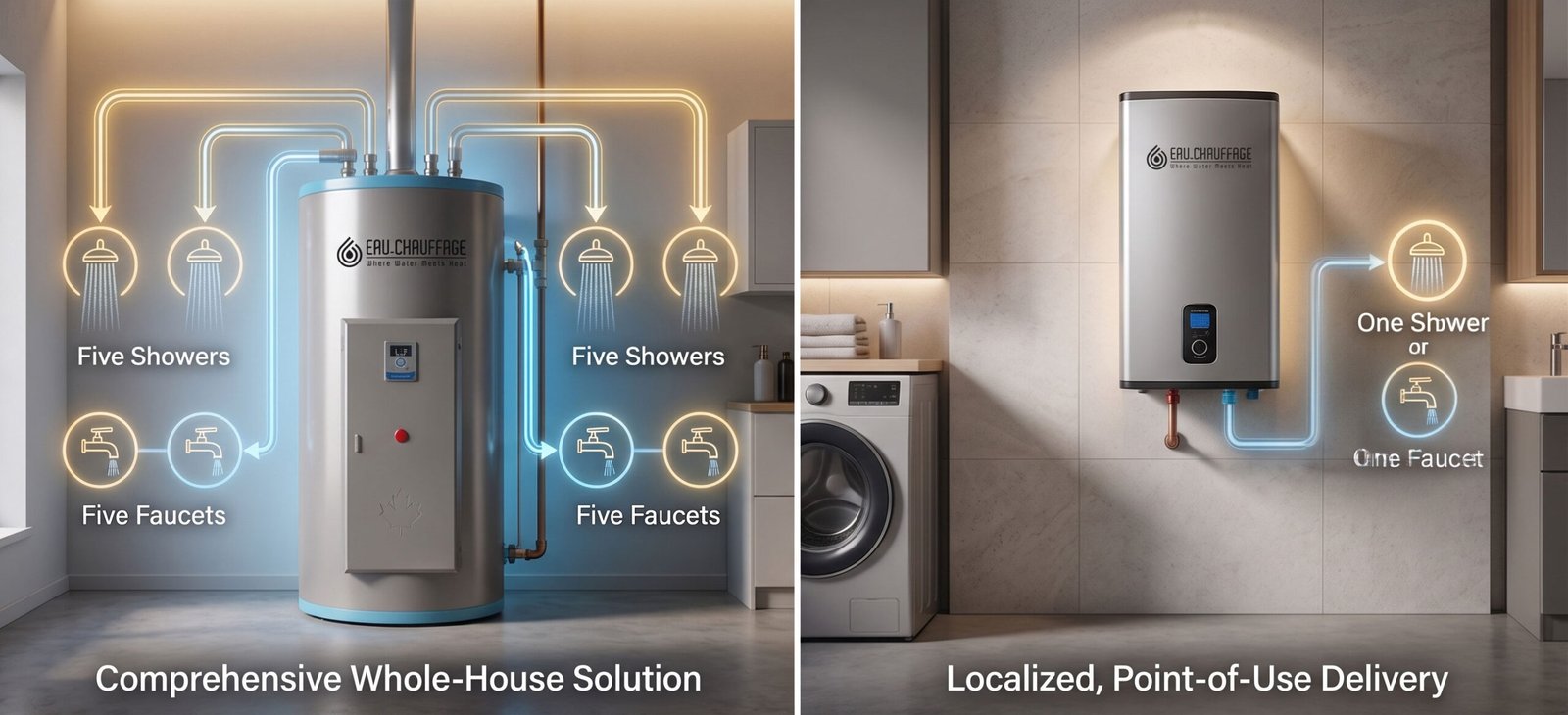
Conviene installare un unico scaldabagno centralizzato per tutto l'edificio, o un'unità individuale in ogni bagno? La maggior parte dei consigli risponde in base alla comodità. Questo articolo risponde in base al costo, perché su quindici anni è su questo che la decisione si gioca davvero.
Nessuna opzione è universalmente più economica. Esiste un punto di pareggio, e sapere all'incirca dove si trova per il vostro edificio è tutto l'esercizio.
I quattro costi che decidono
Confrontare i soli prezzi d'acquisto è il modo in cui gli edifici finiscono con il sistema sbagliato. Ci sono quattro flussi di costo, e non puntano nella stessa direzione.
| Voce di costo | Sistema centralizzato | Unità individuali |
|---|---|---|
| Acquisto | Una unità più grande | Diverse unità più piccole |
| Installazione | Locale tecnico più tubazioni di distribuzione | Posizioni multiple, cablaggio e allacciamenti |
| Esercizio | Un serbatoio che perde calore in standby | Diversi serbatoi che perdono ciascuno calore in standby |
| Manutenzione | Un anodo, una valvola, una visita di manutenzione | Moltiplicato per il numero di unità |
Il prezzo d'acquisto è l'unico che favorisce le unità individuali, ed è anche il più piccolo dei quattro sulla vita dell'installazione.
Costo d'acquisto: perché i litri costano meno all'ingrosso
Ogni scaldabagno comporta costi fissi indipendentemente dalle dimensioni: un involucro esterno, un termostato, dispositivi di sicurezza, isolamento, imballaggio e spedizione. Quei costi cambiano appena tra un'unità da 50 litri e una da 300.
Questo significa che il costo per litro di accumulo scende all'aumentare della capacità. Quattro scaldabagni da 80 litri vi danno 320 litri, ma avete pagato quattro volte l'involucro, i comandi, l'isolamento e il pacchetto di sicurezza. Una unità da 300 litri vi dà quasi lo stesso accumulo avendo pagato tutto questo una sola volta.
Per una o due unità la differenza è piccola. Alla terza o quarta, di solito è decisiva.
Installazione: il costo che nessuno preventiva
Le unità individuali sembrano economiche da installare perché ciascuna è semplice. Il costo sta nella ripetizione.
Ogni unità ha bisogno del proprio fissaggio, dei propri allacciamenti idrici, del proprio circuito elettrico e della propria messa in servizio. Moltiplicate per quattro bagni e la sola manodopera supera spesso la differenza di prezzo delle apparecchiature. In una nuova costruzione portate anche capacità elettrica dedicata a diverse posizioni anziché a una sola.
Un sistema centralizzato inverte lo scambio. L'installazione è concentrata in un unico punto, ma pagate le tubazioni di distribuzione verso ogni punto di prelievo. In un edificio compatto quelle tubazioni sono corte e l'opzione centralizzata vince facilmente. In una villa estesa a un piano con ali distanti, i tratti lunghi erodono il vantaggio, e una soluzione ibrida spesso risulta la migliore.
Costo di esercizio: la perdita di standby si moltiplica
È qui che il divario si allarga silenziosamente, ogni ora, per tutta la vita dell'installazione.
Qualsiasi serbatoio che contiene acqua calda perde calore attraverso le pareti in continuazione, e la resistenza si attiva per compensare, che qualcuno usi l'acqua calda o no. Quella perdita è grosso modo proporzionale alla superficie anziché al volume, e diversi serbatoi piccoli hanno una superficie complessiva molto maggiore di un singolo serbatoio più grande di capacità totale simile.
Quindi quattro piccoli scaldabagni non costano solo quattro volte la manutenzione. Perdono calore da quattro superfici separate, giorno e notte, per sempre.
C'è un'eccezione importante, ed è l'argomento più forte a favore del punto di utilizzo. Uno scaldabagno istantaneo senza serbatoio non accumula nulla, quindi la sua perdita di standby è zero. Per un punto di prelievo usato occasionalmente, o un immobile lasciato vuoto per lunghi periodi, batte qualsiasi sistema centralizzato sul costo di esercizio, perché un serbatoio centralizzato resta caldo per un edificio in cui non c'è nessuno.
Manutenzione: dove sta la differenza a lungo termine
Ogni scaldabagno ha bisogno delle stesse cure di routine: ispezione dell'anodo, rimozione dei sedimenti e collaudo della valvola di sicurezza. Nulla di tutto ciò è costoso singolarmente.
Il problema delle unità individuali è che questa routine si moltiplica, e in pratica smette di essere eseguita. Quattro scaldabagni significano quattro anodi da ispezionare, spesso in quattro posizioni scomode in giro per l'edificio. Ciò che segue è prevedibile: la manutenzione viene saltata, gli anodi si esauriscono, i serbatoi si corrodono, e le unità si guastano presto e in momenti diversi, così le sostituite una alla volta nell'arco di diversi anni.
Una singola unità centralizzata in un locale tecnico accessibile viene mantenuta, perché è una visita a una macchina. Non è una piccola differenza; è spesso la differenza tra un'apparecchiatura che raggiunge la vita utile prevista e una che si guasta anni prima.
Dove si trova il punto di pareggio
| Situazione | Di solito più economico | Perché |
|---|---|---|
| 1 bagno | Individuale | Nessun costo di distribuzione, nessun vantaggio di scala |
| 2 bagni, usati in sequenza | Uno dei due | Caso limite; dipende dalla disposizione e dalle lunghezze dei tubi |
| 2 o più bagni usati contemporaneamente | Centralizzato | Le unità individuali non possono soddisfare la domanda simultanea a basso costo |
| 3 o più bagni | Centralizzato | Acquisto, perdita di standby e manutenzione lo favoriscono tutti |
| Singolo punto di prelievo remoto | Individuale (istantaneo) | Evita le perdite dei tubi lunghi e l'attesa |
| Immobile vuoto per lunghi periodi | Individuale (istantaneo) | Zero perdita di standby quando non c'è nessuno |
| Hotel, complesso residenziale, alloggi per lavoratori | Centralizzato, in cascata | Economie di scala più ridondanza |
La regola pratica: se state considerando tre o più scaldabagni separati, un sistema centralizzato è quasi certamente più economico sulla vita dell'edificio. Con uno o due, è davvero una decisione al limite che la disposizione dovrebbe risolvere.
La risposta è spesso entrambi
Trattare questo come una scelta binaria è l'errore più comune di tutto il confronto.
La maggior parte degli edifici ben progettati usa un sistema centralizzato per i bagni principali, dove si applicano sia la domanda simultanea sia le economie di scala, più una piccola unità istantanea in una cucina lontana, una suite per ospiti o un bagno per il personale dove un tubo lungo sprecherebbe acqua, calore e pazienza.
Quell'ibrido cattura il vantaggio di costo dell'accumulo centralizzato senza pagare per portare l'acqua calda attraverso l'edificio fino a un punto di prelievo usato due volte al giorno.
Cosa non cambia in entrambi i casi
Qualunque strada prendiate, tre specifiche decidono se otterrete l'economia che avevate pianificato.
- Protezione del serbatoio. Rivestimento smaltato con un anodo al magnesio mantenuto, o acciaio inox. Questo decide la vita utile più di qualsiasi altro fattore.
- Qualità dell'isolamento. Governa la perdita di standby, che è il costo di fondo permanente in entrambe le configurazioni.
- Dimensionamento corretto. Un serbatoio centralizzato sovradimensionato spreca denaro in continuazione; unità individuali sottodimensionate vi lasciano a secco nel picco. Vedi quale dimensione di scaldabagno mi serve.
Domande frequenti
Uno scaldabagno centralizzato è più economico delle unità individuali?
Da circa tre bagni in su, di solito sì, perché costo d'acquisto per litro, perdita di standby e manutenzione favoriscono tutti una singola unità. Per un bagno, uno scaldabagno individuale è più economico. Con due dipende dalla disposizione.
Gli scaldabagni individuali consumano più elettricità?
Diversi piccoli serbatoi ad accumulo perdono in genere più calore di standby complessivamente di un singolo serbatoio più grande, perché la superficie totale è maggiore. Le unità istantanee sono l'eccezione: non accumulano nulla, quindi non hanno alcuna perdita di standby.
Quale è meglio per una villa?
Centralizzato per i bagni principali, soprattutto dove due o più sono usati contemporaneamente. Molte ville aggiungono un'unità istantanea compatta per una cucina lontana o un'area del personale anziché estendere le tubazioni attraverso l'edificio.
Posso passare dalle unità individuali al centralizzato?
Sì, anche se richiede tubazioni di distribuzione e un locale tecnico, quindi è più facile durante una ristrutturazione. Il risparmio si accumula attraverso costi di esercizio e manutenzione più bassi anziché arrivare subito.
E per una casa vacanze usata poche settimane l'anno?
Gli scaldabagni istantanei individuali vincono di solito nettamente. Un serbatoio centralizzato che resta caldo per un edificio che nessuno occupa è il costo di esercizio più evitabile che esista.
Fate il calcolo per il vostro edificio
Indicateci il numero di bagni, quanti punti di prelievo funzionano contemporaneamente, la disposizione dell'edificio e le abitudini di occupazione, e i nostri ingegneri vi diranno quale configurazione costa meno nel vostro caso specifico, incluso se un ibrido ha più senso.
Email sales@eauchauffage.com o chiama +1 (905) 299-3382. Correlati: sistemi di riscaldamento centralizzato e sistemi di acqua calda commerciali.