









سخانات المياه الكهربائية المركزية: الكفاءة، والسلامة، ومستقبل تقنيات تسخين المياه

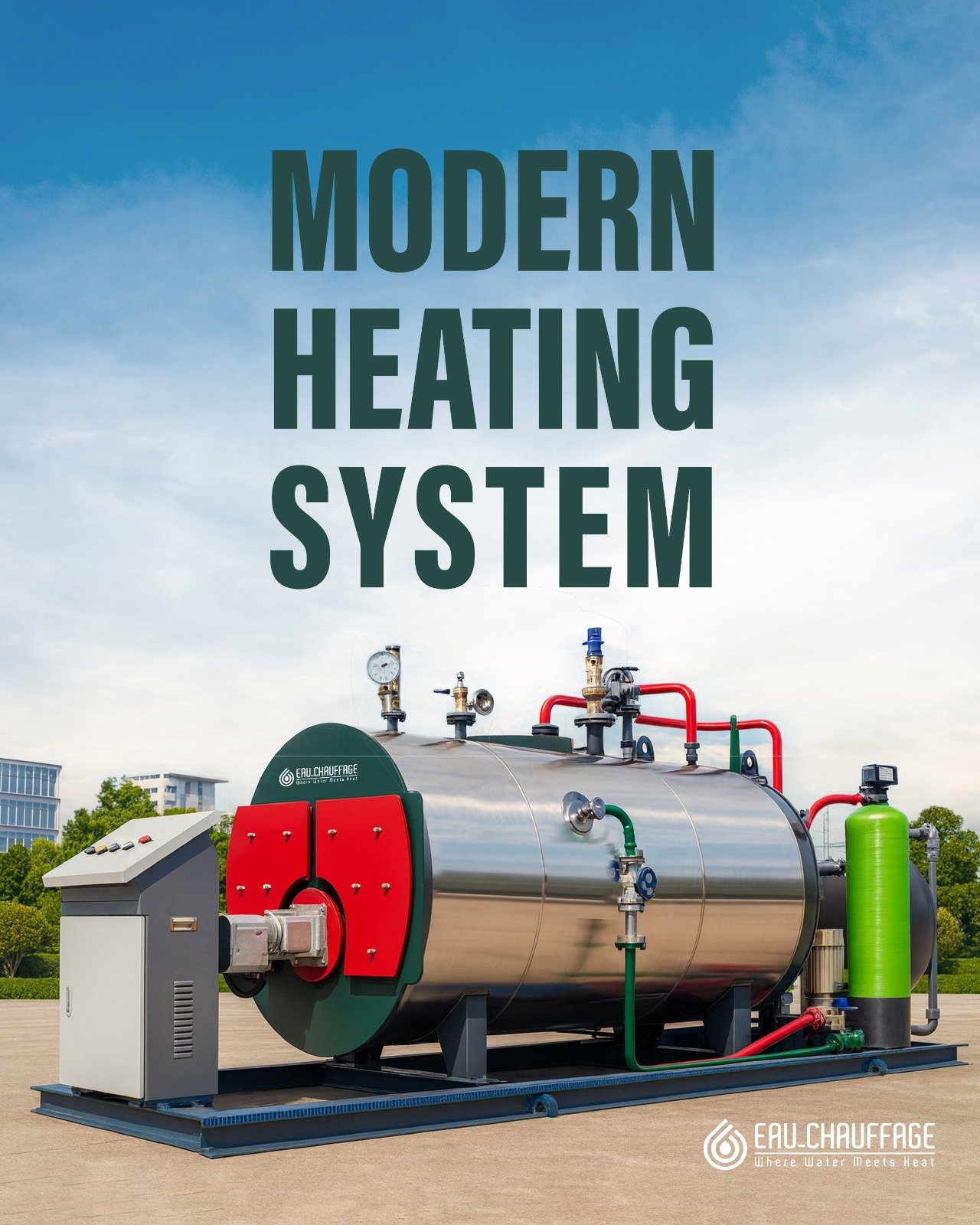
Electric central water heating is the default choice for most modern buildings, and for good reasons: no flue, no combustion products, simple installation and very little to service. But “electric” covers a wide range of running costs, and the difference between a well-specified system and a poorly specified one shows up on every bill for the next fifteen years.
This article focuses specifically on the electric side: how the heating actually works, what genuinely drives your running cost, the safety systems that matter, and where the technology is heading. For system design, capacity selection and tank material, see our companion guide to central water heaters and tank construction.
How a Central Electric Water Heater Works
An immersed resistive element sits inside the tank. Current passes through it, the element resists that flow, and the resistance releases heat directly into the surrounding water. A thermostat monitors temperature and switches the element on and off to hold the set point.
Because the element is immersed in the water rather than separated by a heat exchanger, the transfer is direct and there is no flue carrying warm gases outside. That is the fundamental structural advantage of electric heating, and it is the reason the efficiency conversation is different from gas.
Electric Efficiency: The Honest Version
At the point of use, electric resistance is close to 100% efficient
Essentially all the electrical energy delivered to the element becomes heat in the water. There is no exhaust gas carrying energy up a flue, which is where a combustion appliance loses a meaningful share of its fuel. A gas storage heater typically converts a substantially smaller proportion of its fuel energy into hot water for this reason.
But efficiency is not the same as cost
This is where most buying advice becomes misleading. A 100% efficient appliance running on expensive energy can cost more per shower than a 75% efficient appliance running on cheap energy. Whether electric or gas is cheaper for you depends entirely on the price per kilowatt-hour of each fuel in your country, not on the efficiency rating printed on the box.
Do the arithmetic for your own tariff before assuming either technology wins. In regions with subsidised electricity, electric central heating is usually the clear economic choice as well as the practical one.
And environmental impact depends on your grid
An electric heater produces no emissions in your building, which genuinely improves indoor air safety. Its wider carbon footprint, however, reflects how your national grid generates electricity. Where generation is largely renewable, electric heating is dramatically cleaner. Where the grid runs mainly on fossil fuel, the advantage narrows considerably.
This is precisely why pairing electric storage with solar thermal input or a heat pump changes the equation so decisively, and we would rather tell you that than overstate the case for a plain electric element.
What Actually Drives Your Running Cost
Since the element itself is already near-100% efficient, savings do not come from a “more efficient element”. They come from these five levers:
| Lever | Why it matters | Impact |
|---|---|---|
| Insulation quality | Standby loss runs 24/7 whether you use water or not | عالية |
| Set temperature | Every extra degree increases both loss and scale formation | عالية |
| Correct capacity | An oversized tank keeps surplus water hot for nothing | عالية |
| Heating schedule | Heating before peak use instead of continuously | متوسط |
| Scale and sediment | Insulates the element, forcing longer run times | متوسط |
Notice that four of the five are decided at specification and installation, not afterwards. This is why sizing and insulation deserve more attention than the marketing features on the control panel.
Electric vs Gas Central Heating: A Fair Comparison
| العامل | Electric central | Gas central |
|---|---|---|
| Efficiency at point of use | Near 100% | Lower, energy lost via flue |
| Running cost | Depends on electricity tariff | Depends on gas price |
| Indoor air safety | No combustion products | Requires correct flue and ventilation |
| Installation | Simpler, no flue needed | Flue, gas line, clearances |
| Servicing | Minimal | Periodic combustion servicing |
| Recovery speed | Depends on kW rating | Typically fast |
| Carbon footprint | Follows your grid mix | Direct fossil emissions |
Electric wins decisively on indoor safety, installation simplicity and servicing burden. On running cost, the honest answer is that it depends on local energy prices. On carbon, it depends on your grid.
The Safety Systems That Actually Matter
Electric water heating removes carbon monoxide risk entirely, but it introduces electrical risk in a wet environment. A properly built unit addresses this in layers:
Earth leakage protection
The single most important electrical safeguard. It detects current escaping to earth, which is what happens if an element degrades, and disconnects the supply before it can reach a person. Confirm the unit has leakage protection and that the circuit is properly earthed.
Thermostat plus independent thermal cut-out
The thermostat manages normal operation. The thermal cut-out is a separate device that exists solely for the case where the thermostat fails, shutting off power before water reaches a dangerous temperature. A system with only a thermostat has no second line of defence.
Pressure relief valve
Heated water expands. If that expansion cannot escape, pressure rises inside a sealed steel vessel. The relief valve is a genuine safety-critical device, and it can seize over time, so it should be tested periodically rather than assumed to work.
Anti-scald control
Storage systems are often held hotter than any tap should deliver. Temperature limiting or mixing at the outlet matters in homes with children or elderly residents, where a few seconds of contact with very hot water causes serious injury.
Every Eau Chauffage unit is manufactured under an ISO 9001:2015 certified quality management system, with safety components meeting recognised UL and CE benchmarks.
Power Rating and Recovery Rate: The Spec Buyers Overlook
Two 500-litre heaters with different kW ratings behave completely differently. Capacity tells you how much hot water you have; power rating tells you how fast you get it back after the tank is drawn down.
A household with demand spread through the day can accept slower recovery. A hotel that empties its tanks between 6am and 8am cannot, and needs either much larger storage or a higher recovery rate. Specifying capacity without considering recovery is how buildings end up with a large tank that still runs cold during the morning peak.
Higher power also means a heavier electrical draw, so the building supply and cabling must support it. This is a design decision, not an afterthought.
Where Electric Central Heating Is the Right Choice
- Buildings without a gas connection — no flue, no gas line, far simpler installation.
- Apartments and enclosed plant rooms — no combustion means no ventilation and flue requirements.
- Where indoor air safety is a priority — no risk of combustion products in occupied spaces.
- Buildings planning solar or heat pump integration — electric storage pairs naturally with both.
- Where servicing access is limited — far less routine maintenance than combustion equipment.
Where the Technology Is Heading
Heat pumps: the genuine efficiency leap
A resistive element cannot exceed 100% efficiency, because it can only convert the energy it receives. A سخان مياه بمضخة حرارية sidesteps that ceiling entirely by moving heat from the surrounding air rather than generating it, delivering several units of heat for each unit of electricity consumed. For buildings with steady, high-volume demand, this is the largest single reduction in water heating cost currently available.
Solar hybrid
Solar thermal carries the base load while electric storage guarantees supply through cloud and peak demand. In high-irradiance regions this combination removes a large share of annual water heating cost while keeping the reliability of a conventional system. See our سخانات مياه شمسية للفيلات for pressurised systems designed to pair with stored backup.
Smart control, realistically
Scheduling and app control are useful, but their value is often overstated. A smart controller saves money mainly by avoiding heating water nobody uses. If your tank is correctly sized and well insulated, the remaining savings are modest. If it is oversized and poorly insulated, no app will fix the underlying problem. Specify the hardware right first, then add convenience.
الأسئلة المتداولة
Is an electric central water heater expensive to run?
It depends on your electricity tariff and how well the system is specified. Because the element is already near-100% efficient, running cost is driven mainly by insulation quality, correct sizing and set temperature rather than by the element itself.
What temperature should I set?
High enough for hygiene and stored volume, low enough to limit standby loss and scale. Unnecessarily high settings waste energy, accelerate scale formation and increase scald risk, so avoid raising it as a substitute for correct capacity.
Electric or gas: which should I choose?
Electric for indoor safety, simpler installation and minimal servicing, particularly where there is no gas connection. Compare running costs using the actual price per kWh of each fuel where you live rather than relying on general claims.
Can I add solar to an existing electric system?
In many cases yes, with solar providing pre-heated water and the electric system topping up when needed. Feasibility depends on roof area, orientation and the existing installation, so it is worth having it assessed rather than assumed.
What capacity range is available?
Eau Chauffage central systems run from 100 litres to 7,500 litres, covering apartments through to hotels, labour accommodation and industrial facilities.
Specifying Your System
Eau Chauffage manufactures electric central water heating systems from 100 to 7,500 litres, with enamel-coated and stainless steel tank construction, magnesium anode protection, PUF insulation and layered overheating, leakage and pressure protection, under an ISO 9001:2015 certified quality management system.
Tell us your building type, fixture count, occupancy pattern and electrical supply, and our engineers will recommend both capacity and power rating so the system recovers fast enough for your peak. Email sales@eauchauffage.com أو اتصل +1 (905) 299-3382.
Further reading: أنظمة التدفئة المركزية بالمياه, our commercial water heater range, and renewable energy options including solar and heat pumps.
Specifying at commercial scale? Our commercial hot water systems guide covers peak-hour sizing, recovery rate and cascaded redundancy.