











سخانات المياه الكهربائية مقابل سخانات المياه الغازية: أيهما مناسب لك؟

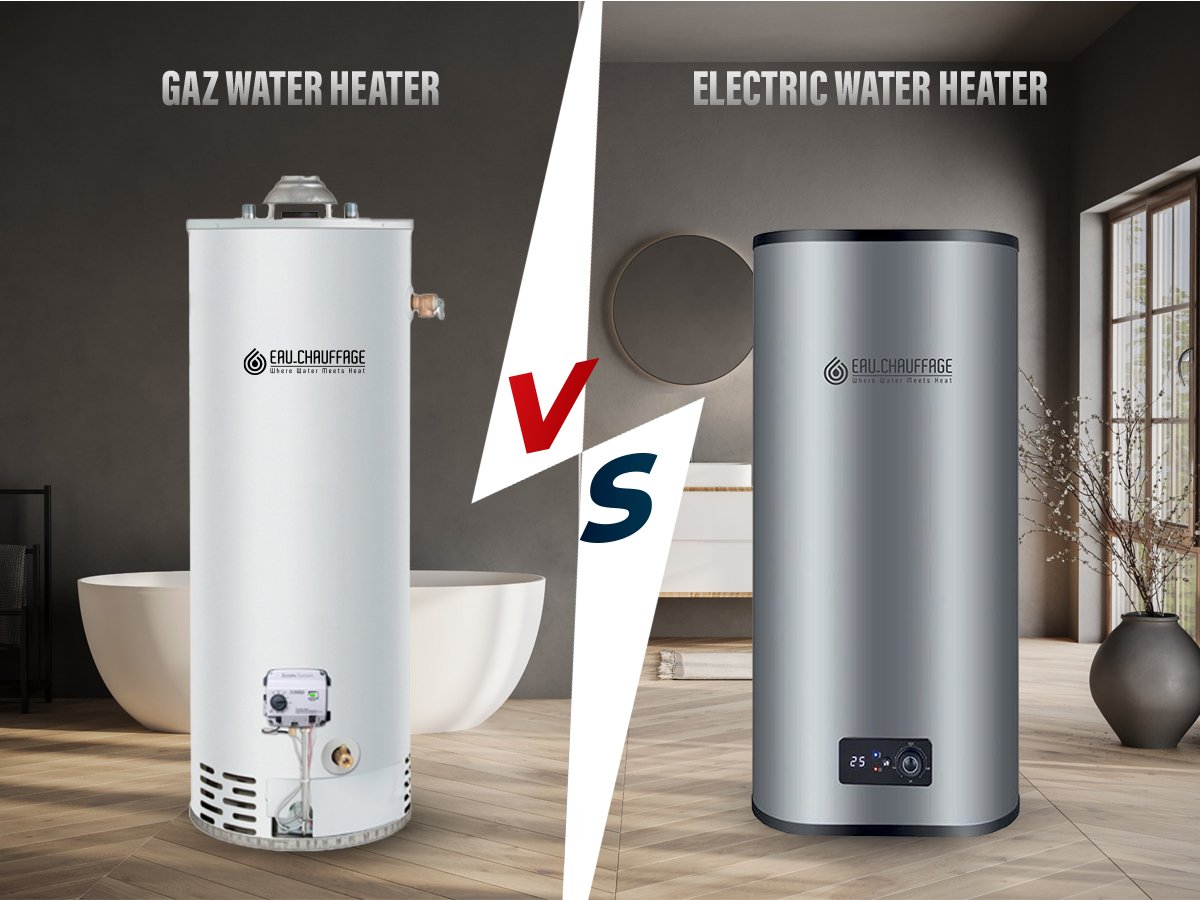
Electric or gas is the first real decision in any water heater purchase, and it is the one most often made on assumption rather than arithmetic. Both technologies work. Which one suits you depends on your building, your local energy prices and how much maintenance you are willing to schedule.
This comparison covers the fuel decision specifically. If you are choosing between electric technologies, see our guide to electric, solar and heat pump systems.
How Each One Heats Water
An electric heater passes current through a resistive element immersed directly in the water. The resistance releases heat straight into the water with nothing lost to an exhaust.
A gas heater burns fuel in a combustion chamber and transfers that heat to the water through a heat exchanger. Combustion produces exhaust gases that must leave the building through a flue, and those gases carry away a meaningful share of the energy in the fuel.
That structural difference drives almost everything below.
Efficiency Is Not the Same as Cost
Electric resistance heating converts essentially all the electricity delivered to the element into heat in the water. Gas appliances convert a smaller proportion of their fuel energy, because some leaves through the flue.
It is tempting to stop there and declare electric the winner. That would be wrong, because efficiency describes how much of the energy you buy ends up in the water, not how much that energy costs.
A near-100% efficient appliance running on expensive electricity can easily cost more per shower than a less efficient appliance running on cheap gas. The only way to know which is cheaper for you is to compare the price per kilowatt-hour of each fuel in your own country, then adjust for the efficiency difference. In regions with subsidised electricity, electric usually wins on cost as well as convenience. Where gas is abundant and cheap, the reverse can be true.
Side by Side
| العامل | Electric | Gas |
|---|---|---|
| Efficiency at point of use | Near 100% | Lower, energy lost via flue |
| Running cost | Follows electricity tariff | Follows gas price |
| Installation | Simple; no flue or gas line | Flue, gas supply, ventilation, clearances |
| Indoor air safety | No combustion products | Requires correct flue and ventilation |
| Servicing | Minimal | Periodic combustion servicing |
| Recovery speed | Depends on kW rating | Typically fast |
| Suitability for apartments | ممتاز | Often restricted |
| Carbon footprint | Follows the electricity grid mix | Direct fossil emissions |
Safety: The Clearest Difference
Gas appliances are safe when correctly installed, correctly flued and regularly serviced. The difficulty is that all three conditions must hold continuously, and the consequence of any one failing is serious: incomplete combustion produces carbon monoxide, which is odourless.
Electric heating removes that failure mode entirely. There is no combustion, so there are no combustion products, no flue to become blocked and no ventilation requirement to be compromised by a later renovation.
Electric introduces a different risk, electricity in a wet environment, which is managed by earthing, earth leakage protection and an independent thermal cut-out. These are mature, reliable safeguards, and unlike a flue they are not degraded by building alterations made years later.
Installation: What Each One Demands
Electric installation is generally simpler. There is no flue to route, no gas connection to certify and no combustion air requirement, which is why electric dominates apartments and buildings where a gas supply either does not exist or would be expensive to bring in.
The one electric constraint worth checking early is electrical capacity. Instant electric heaters in particular draw substantial current while running, and the building supply and cabling must support it. For storage systems the draw is steadier and rarely problematic.
Gas installation requires a certified connection, a compliant flue route, clearances and ventilation. In an existing building without gas already present, that infrastructure cost frequently exceeds any running-cost advantage the fuel might offer.
Maintenance Over the Long Term
Both types share the maintenance items that decide tank life: anode rod inspection, sediment removal and pressure relief valve testing. Neglecting those will end either machine early.
Gas adds combustion servicing on top: burner condition, flue integrity and combustion safety checks. That is a recurring cost and a recurring appointment, and in buildings where access is difficult it is also a recurring administrative burden.
Which Should You Choose?
- Choose electric if there is no gas connection, if you are in an apartment, if indoor air safety is a priority, if you want minimal servicing, or if you plan to add solar or a heat pump later.
- Choose gas if gas is already connected and significantly cheaper per kWh in your region, and you are comfortable with scheduled combustion servicing.
- Do the arithmetic either way. Take your current tariffs, adjust for efficiency, and compare. It takes ten minutes and it is the only comparison that reflects your actual situation.
For most residential and commercial buildings in regions with reliable and reasonably priced electricity, the combination of simpler installation, lower servicing burden and no combustion risk makes electric the more practical choice, which is why our range is built around it.
الأسئلة المتداولة
Is gas always cheaper to run?
No. It depends entirely on the relative price of gas and electricity where you live, and on the efficiency difference between the two appliances. In some markets electricity is the cheaper option.
Which heats water faster?
Gas burners often deliver fast recovery, but a well-specified electric unit with an adequate power rating recovers quickly too. Compare stated recovery rates rather than assuming from fuel type.
Can I switch from gas to electric?
Usually yes, and it is generally simpler than the reverse because you remove a flue requirement rather than adding one. The main check is that your electrical supply supports the unit you choose.
Which is better for the environment?
Gas produces direct emissions at the building. Electric produces none locally, but its wider footprint reflects how your grid generates power. Pairing electric with solar or a heat pump is what decisively lowers the total.
Working Out Which Is Cheaper: The Method
You do not need an energy consultant for this. You need two numbers from your own bills and one adjustment.
- Find your electricity price per kilowatt-hour. It is on your bill, sometimes as a tiered rate. Use the tier you would actually fall into.
- Find your gas price per kilowatt-hour. Gas is often billed by volume, so convert using the energy content figure your supplier publishes.
- Adjust for efficiency. Electric delivers nearly all the energy you buy into the water. A gas appliance delivers a smaller share, the remainder leaving through the flue, so divide the gas price by that appliance’s efficiency to get the real cost per useful kilowatt-hour.
Compare the two adjusted figures. Whichever is lower is genuinely cheaper for your building, regardless of what any general article claims. Then weigh the infrastructure cost: if gas is marginally cheaper per unit but requires a new connection and flue, the payback period may be longer than the appliance lifespan.
Situations Where the Choice Is Already Made
In practice, many buildings do not have a free choice, and recognising that early saves time.
| Situation | Practical outcome |
|---|---|
| No gas connection to the building | Electric, unless demand justifies infrastructure cost |
| Apartment with restricted flue routing | Electric |
| Planning solar or a heat pump later | Electric, which integrates with both |
| Gas already connected and cheap locally | Gas is worth costing properly |
| Building with difficult service access | Electric, for the lower servicing burden |
The pattern is that electric wins on flexibility and gas wins on fuel price where the infrastructure already exists. Neither answer is universal, which is exactly why the arithmetic matters more than the general advice.
Need Help Comparing?
Send us your building type, existing connections and local tariffs and we will help you compare properly. Email sales@eauchauffage.com أو اتصل +1 (905) 299-3382. See our سكني و central water heating ranges.